Joe Bouchey

I build with AI, hands-on.

I help people actually use new technology. Lately that means AI, and building things with it myself.

I've spent 14 years helping large organizations adopt new tools, 10,000 sellers and 100,000 clinicians at a time. I work with Cisco as a contractor, currently on its Gong rollout. On my own time I learn by building: this is where that work lives.

AI lab

What I've built, how I work with AI day to day, and what I've learned.

From my phone to live, with one sign-off

How a change reaches this site

I don't just use AI, I build workflows around it: who does each step, where I sign off, and how I'd actually use it day to day. This one lets me change a site or an app from my phone, with my home server doing the work.

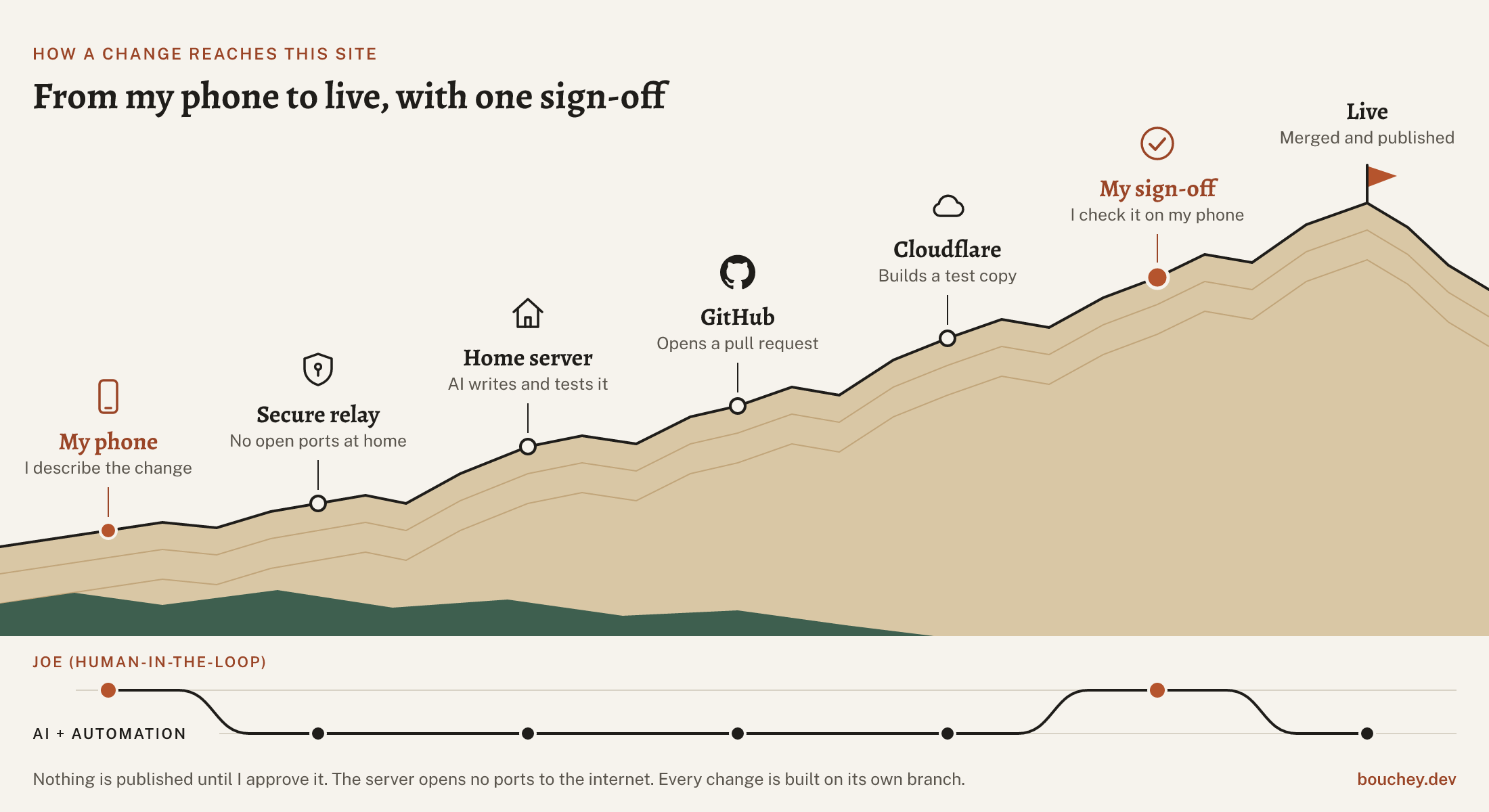
How a change reaches this site: from my phone to live, with one sign-off An elevation profile of a trail climbing left to right, with seven waypoints. I describe a change on my phone. A secure relay passes it to my home server without opening any ports at home. On the home server, AI writes and tests the change. It opens a pull request on GitHub. Cloudflare builds a test copy. I check the test copy on my phone and sign off. Only then is it merged and published. Below the profile, two tracks show who is working at each step: I act at the first step and at the sign-off; AI and automation handle the relay, the writing and testing, the pull request, the test copy, and the final publish. My phone Secure relay Home server GitHub Cloudflare My sign-off Live I describe the change No open ports at home AI writes and tests it Opens a pull request Builds a test copy I check it on my phone Merged and published JOE (HUMAN-IN-THE-LOOP) AI + AUTOMATION Nothing is published until I approve it. The server opens no ports to the internet. Every change is built on its own branch.
  1. My phone. I describe the change.
  2. Secure relay. No open ports at home.
  3. Home server. AI writes and tests it.
  4. GitHub. Opens a pull request.
  5. Cloudflare. Builds a test copy.
  6. My sign-off. I check it on my phone.
  7. Live. Merged and published.
Why
Mobility without losing power. I wanted to ask for a change from anywhere, get a preview back, and still have AI running real commands on my own server.
AI did
The server setup, the code for each change, and the drawing of this diagram.
I did
The workflow, the rules, and the taste. The first diagram looked like every other AI graphic: dark cards, one orange highlight. I asked for a trail profile instead, because that's me.
Sign-off
Nothing is published until I approve it. Every change goes through GitHub first, so there is a history and I can bring back a past version if AI overwrites something.
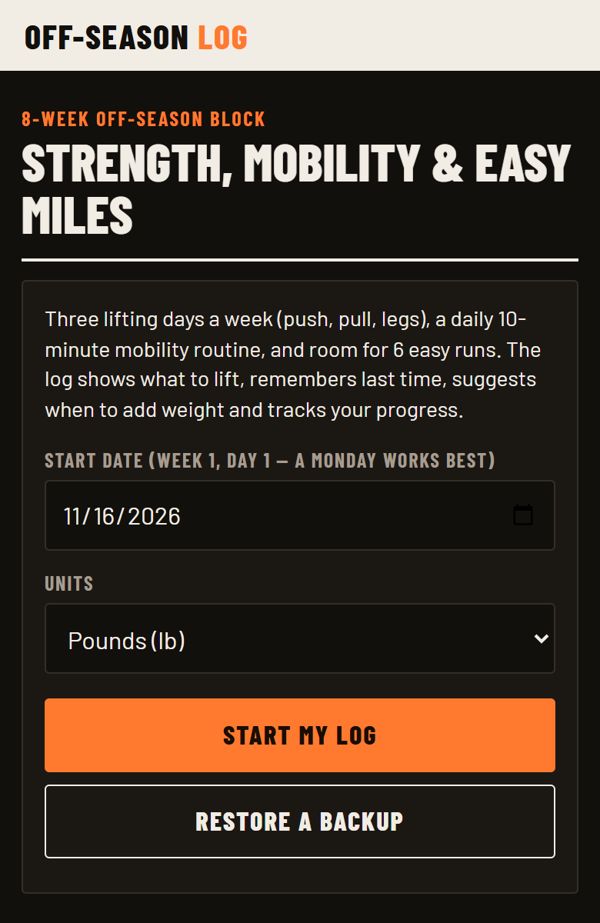
The gym log on a phone: an eight-week off-season block, a start date, units, and a Start my log button.

Gym log

Built with AI, from my iPhone

A workout log I use every week.

Why
A practical need, and a test: could I ship a working app using only prompts from my phone.
AI did
Nearly all the code.
I did
The need, the prompts, deployment, and every round of fixes.
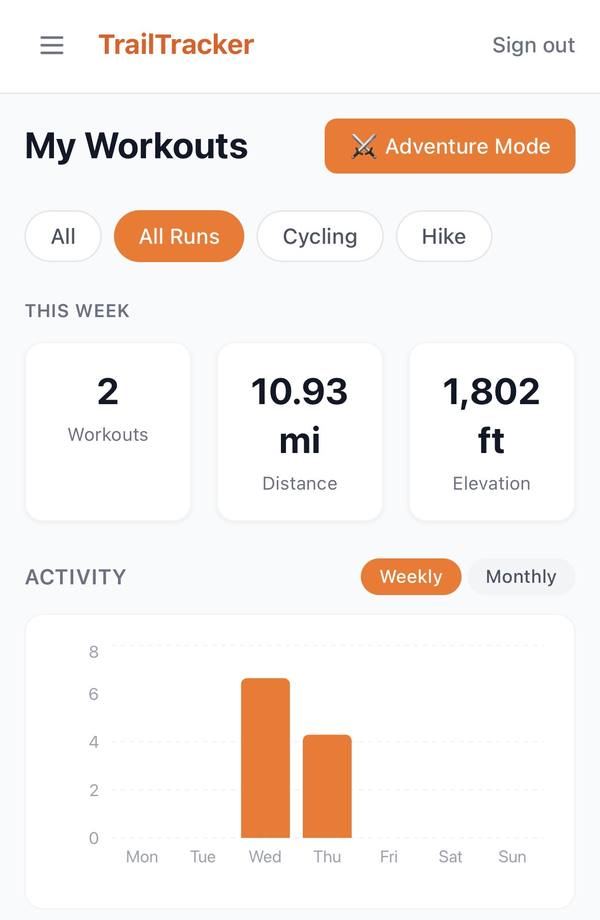
TrailTracker on a phone: this week's workouts, distance and elevation, and a weekly activity chart.

TrailTracker

Built with AI coding tools (Claude Code)

A Strava-style dashboard for my runs and hikes: FIT and GPX uploads, route maps, elevation and heart-rate charts. React, Node, PostgreSQL.

Why
To see how close I could get to a commercial product as one of my first Claude Code projects.
AI did
Scaffolding, interface, debugging.
I did
Product decisions, the data model, hosting.

A photo backup I own, with one sign-off

Self-hosted with Immich, checked by AI

My phone's photos now back up to a server at home, with an encrypted copy offsite. AI checks the copies against each other, and I decide what gets deleted.

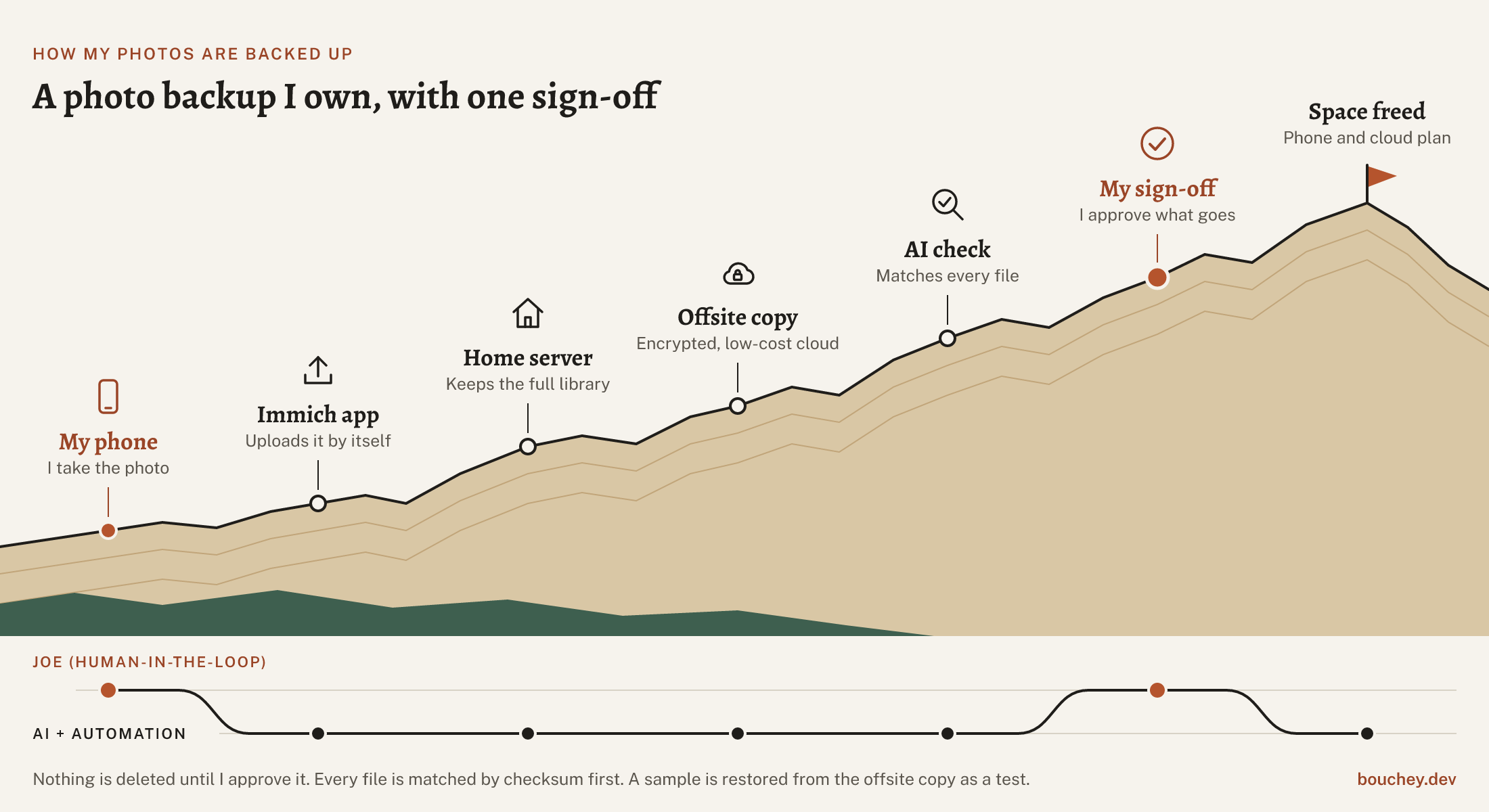
How my photos are backed up: a photo backup I own, with one sign-off An elevation profile of a trail climbing left to right, with seven waypoints. I take a photo on my phone. The Immich app uploads it by itself. My home server keeps the full library. An encrypted copy goes to low-cost cloud storage offsite every night. AI checks every file against the library and test-restores a sample from the offsite copy. I read the report and approve what gets deleted. Only then is space freed on my phone and cloud plan. Below the profile, two tracks show who is working at each step: I act at the first step and at the sign-off; AI and automation handle the upload, the library, the offsite copy, the check, and the clean-up. My phone Immich app Home server Offsite copy AI check My sign-off Space freed I take the photo Uploads it by itself Keeps the full library Encrypted, low-cost cloud Matches every file I approve what goes Phone and cloud plan JOE (HUMAN-IN-THE-LOOP) AI + AUTOMATION Nothing is deleted until I approve it. Every file is matched by checksum first. A sample is restored from the offsite copy as a test.
  1. My phone. I take the photo.
  2. Immich app. Uploads it by itself.
  3. Home server. Keeps the full library.
  4. Offsite copy. Encrypted, low-cost cloud.
  5. AI check. Matches every file.
  6. My sign-off. I approve what goes.
  7. Space freed. Phone and cloud plan.
Why
My iCloud plan was full and the next step was a bigger monthly bill. I also wanted to own my photos, and to learn by building it.
AI did
Matched every file against the library by checksum, and restored a sample from the offsite copy to prove it works. It found one corrupt video and 1,368 photos that weren't backed up when I thought they were.
I did
Chose the setup, recovered the missing video, fixed the upload problem on my phone, and decided what gets deleted.
If you try it
Plan first, so you know how many files and how much space you're dealing with. Test along the way. Don't delete anything until retrieval has worked for a few cycles. Run a recovery before you need one.

Home server and local AI

Self-hosted

A home server I built from scratch: Docker services for photos, media and files, local language models, and experiments with AI agents.

Why
To learn Linux, networking and deployment by breaking things.
AI did
Scaffolding and documentation.
I did
The hardware, the network design, what runs and why.

Asteroids

Python, written without AI

A playable Asteroids game in Python, built as a guided project in Boot.dev's backend course, then packaged for the browser.

Why
Fundamentals first: game loop, classes, collision, no assistant.
AI did
Nothing.
I did
The code, following the course's path and relying heavily on existing Python libraries.
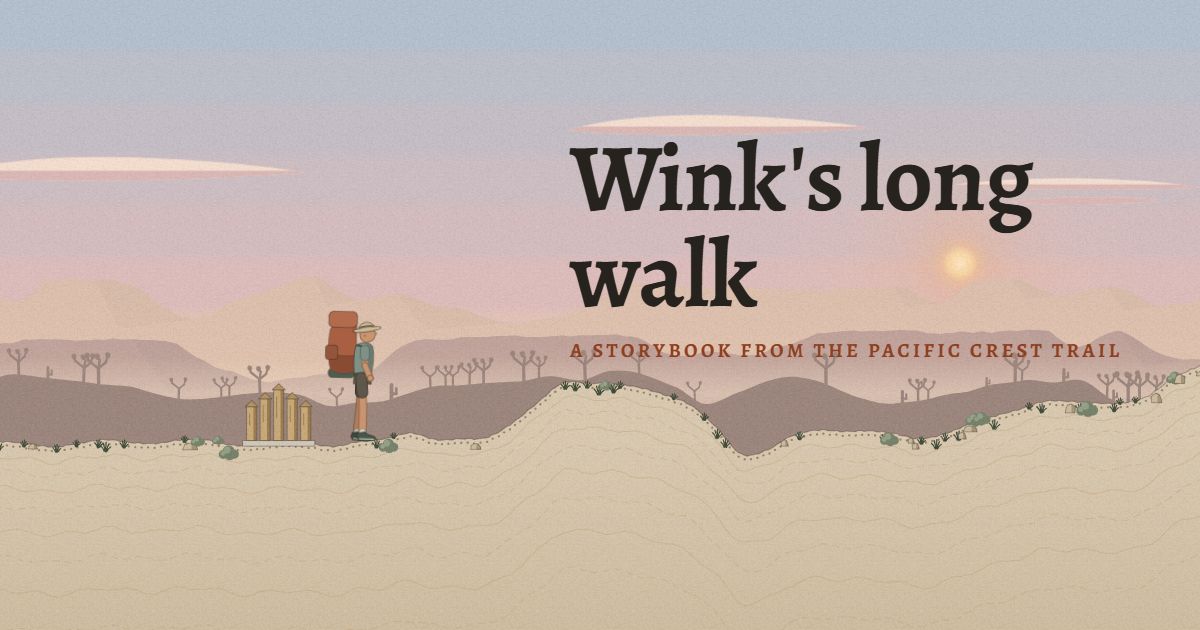
The storybook's opening scene: an illustrated hiker with a red pack on a desert trail at sunrise.

The hike

Storybook website, built by directing AI In progress

An illustrated, voiced walk through a long hike I took, made to share with family and kids.

Why
To do something big with AI and finish it.
AI did
The illustration and animation code.
I did
The idea, the art direction, the story, the voice.

How I actually use AI

From my own logs. Updated 15 November 2026. The good, the bad, the ugly. It's my journey, not perfection.

Pull requests shipped
12
Scheduled checks run
2
Ran without AI
2 of 2
AI cost of checks
$0.00
Backup nights in a row
17
Last restore test
15 Nov
Failure alerts reach me
Yes
Sign-off hard block
Partly
Tests of the checks
Not started

Client projects

sierradegroff.com

DevOps with AI tooling, for a real client

A sponsor-facing media kit for a professional athlete. I built it and handle hosting and deploys on Cloudflare Pages.

SNVBC.org

Client project, hosting migration

Moved a nonprofit's WordPress site to new hosting and reworked its front-end pages.

Experience

Most of my career has been the part that comes after a company buys new software: helping people actually use it.

I'm part of Cisco's Gong program, which activated 18,000 sellers in its first year with 50% regular week-over-week adoption of launched use cases. Those are the program's numbers, shared publicly at Gong Celebrate 2026.

History

2026 – now
Business Activation & Adoption Manager, Gong Rollout Cisco (contract)
2023 – 2026
Program Manager, Sales Excellence Strategy & Planning Cisco (contract)
2019 – 2023
Adoption Manager, Next Gen Forecast Cisco (contract)
2011 – 2018
Adoption & Change Management Strategist, Team Lead; Client Trainer and eLearning Developer Cerner (now Oracle Health)
Say hello

How a change reaches this site: a trail profile with seven waypoints from My phone to Live, and two tracks showing which steps are Joe's and which are AI and automation.
Download